
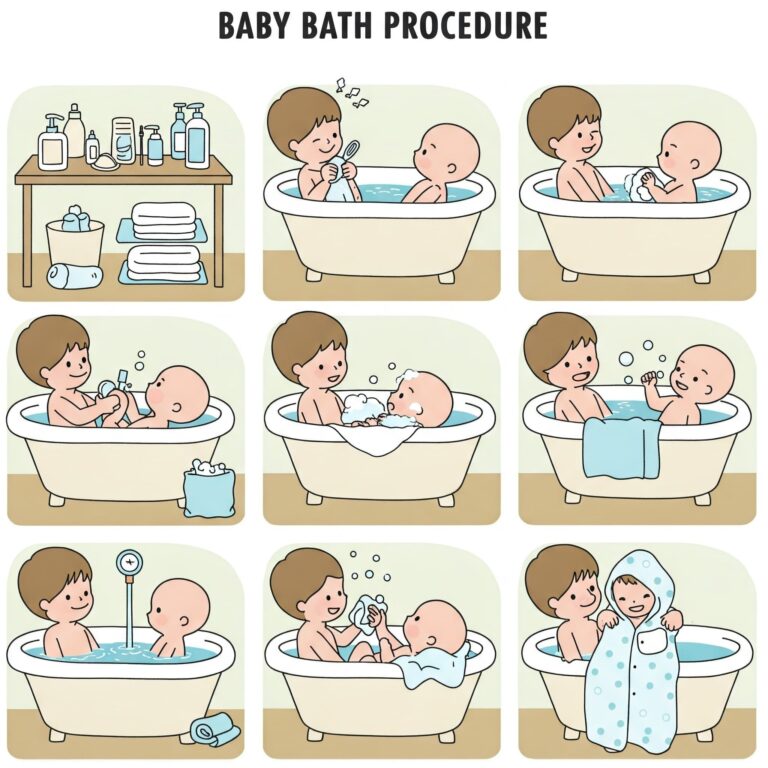
Bathing a baby doesn’t have to be stressful when you follow a safe and gentle routine. Here’s a step-by-step baby bath procedure to help you confidently give your baby a clean and calming experience.
Step 1: Gather All Bath Essentials
Before you start, make sure you have everything within arm’s reach:
A small baby bathtub or basin
Mild baby soap and shampoo
Washcloth
Cup for rinsing
Hooded towel
Clean diaper and clothes
Recommended Product:
Mee Mee Baby Bath Kit Set – All bath items in one complete kit.
Step 2: Check Room and Water Temperature
Ensure the room is warm and draft-free (around 24–26°C). Fill the baby tub with 2–3 inches of warm water. Use your elbow or a bath thermometer to check that the water is between 37°C to 38°C (98.6°F to 100.4°F).
Recommended Product:
Dreambaby Bath Thermometer
Step 3: Undress and Support the Baby
Gently undress your baby, holding them securely. Support the baby’s head and neck with one hand while lowering their body slowly into the water with the other. Make sure the head stays above water at all times.
Recommended Product:
R for Rabbit Smart Baby Bath Seat
Step 4: Clean from Top to Bottom
Use a soft washcloth to gently clean your baby’s face first with just water. Then use a mild baby soap to clean the rest of the body—starting from the neck, arms, tummy, and legs. Lastly, gently clean the diaper area.
Recommended Product:
Johnson’s Baby Top-to-Toe Wash
Step 5: Rinse Gently
Use a small cup or your hand to gently pour water and rinse off the soap. Be extra careful around the eyes and ears. Avoid getting water inside your baby’s ears.
Step 6: Dry and Dress the Baby
Lift your baby out of the tub using a firm grip. Wrap them immediately in a soft towel. Pat dry gently, especially in skin folds (underarms, neck, behind ears). Once dry, apply baby lotion if needed, then put on a fresh diaper and clothes.Recommended Product:
LuvLap Hooded Baby Towel + Baby Lotion Combo
Tips:
Bathe your baby when they are calm—not right after feeding or when overtired.
Make bath time short—5 to 10 minutes is enough.
Stay close and enjoy bonding during this soothing routine!
Pros and Cons of Bathing Baby After Birth
Bathing a newborn is a special moment, but timing is key. Many parents wonder when to give the first bath and how often to continue in the early days. Let’s look at the pros and cons of bathing your baby after birth.
✅ Pros of Bathing Baby After Birth
Cleans the Baby’s Skin
Bathing helps remove blood, amniotic fluid, and meconium (baby’s first stool) from the baby’s skin in the first hours or days.Promotes Relaxation
A warm bath can calm and soothe your baby, helping them sleep better and feel more secure.Establishes a Routine
Starting gentle baths early can help set up a bedtime routine as your baby grows.Bonding Time
Bath time offers skin-to-skin contact and eye contact, helping you connect with your baby emotionally.Temperature Regulation Practice
Short, warm baths in a controlled setting help your baby gradually adapt to external temperature changes.
Recommended Product:
Chicco Baby Bath Foam – Gentle formula suitable for newborns’ first baths.
❌ Cons of Bathing Baby After Birth
Can Cause Skin Dryness
Newborn skin is sensitive, and frequent bathing may strip away natural oils, leading to dryness or irritation.Vernix Benefits Lost
The white, creamy coating on newborns (vernix) has antibacterial and moisturizing benefits. Immediate bathing removes it too soon.Cold Stress Risk
If the bathwater is not at the right temperature, or the baby isn’t dried quickly, they may become chilled.Umbilical Cord Healing Delay
Before the cord stump falls off (usually 1–2 weeks), full baths can risk infection. Sponge baths are safer during this period.Overstimulation
Bathing too soon or too often may overwhelm a newborn’s senses, leading to fussiness.
Recommended Product:
Mee Mee Soft Sponge for Newborns – Ideal for gentle sponge baths before the cord stump falls off.
Finally,
Experts now recommend delaying the first bath for at least 24 hours after birth to preserve the vernix and keep your baby warm and comfortable. In the early days, sponge baths are best until the umbilical cord stump heals. Knowing the pros and cons of bathing your baby helps you make safe, informed choices that support your newborn’s health and comfort.
Best Time to Bath Baby at Night
Bathing your baby at night can be a calming part of the bedtime routine—but timing is important to make sure it’s relaxing and not overwhelming.
🌙 Ideal Time: 30 Minutes to 1 Hour Before Bedtime
Bathing your baby 30 to 60 minutes before their regular sleep time is the best option. It gives them enough time to enjoy the bath, dry off, get dressed, and wind down without becoming overtired or too stimulated.
Why This Time Works:
A warm bath helps relax muscles and soothes your baby.
It signals to the baby that bedtime is coming, helping establish a nighttime routine.
It avoids bathing too close to feeding or sleeping, which may cause discomfort.
Things to Keep in Mind:
Don’t bathe your baby right after feeding—they may spit up or feel uncomfortable.
Make sure the room is warm and all bath items are ready to avoid delays.
Keep the bath short (5–10 minutes) and follow with gentle drying and a cuddle.
Recommended Product:
Mamaearth Calming Baby Wash with Lavender – A mild nighttime wash with soothing fragrance perfect for bedtime routines.
How to Baby Body Massage Step by Step
Massaging your baby not only relaxes them but also helps improve sleep, boost circulation, support digestion, and strengthen the parent-child bond. Here’s a simple and effective baby body massage step-by-step routine you can follow at home.
🛁 Step 1: Prepare the Massage Area
Choose a warm, quiet, and clean space.
Lay a soft towel or blanket on a flat surface.
Make sure your hands are clean and warm.
Undress your baby gently and keep a towel nearby to cover parts of the body you’re not massaging.
Recommended Product:
Mee Mee Baby Massage Mat – Soft and waterproof, ideal for home massages.
🧴 Step 2: Choose the Right Oil
Use natural, baby-safe oils like coconut oil, almond oil, or baby massage oil.
Warm the oil by rubbing it between your palms.
Always do a patch test first to check for allergies.
Recommended Product:
Himalaya Baby Massage Oil – Gentle, natural, and dermatologically tested.
🤲 Step 3: Start with the Legs
Hold your baby’s ankle gently.
With soft, downward strokes, massage from thigh to ankle.
Use both hands to apply gentle pressure—one after the other.
Gently massage the feet and toes, using circular motions.
💪 Step 4: Move to the Arms
Take one arm and use long strokes from shoulder to wrist.
Massage the palm and each finger gently.
Repeat on the other arm, talking to your baby or singing softly to keep them calm.
👶 Step 5: Massage the Chest and Tummy
Place both hands on your baby’s chest and gently stroke outwards.
For the tummy, use clockwise circular motions—this helps with digestion and gas relief.
Avoid the belly button area if the cord stump hasn’t fallen off yet.
Recommended Product:
Mamaearth Soothing Tummy Roll-On – Great for post-massage tummy care and gas relief.
🕊️ Step 6: Massage the Back
Gently turn your baby on their tummy.
Use long strokes from the neck to the bottom with both hands.
Avoid the spine; focus on the sides and shoulders.
🧼 Step 7: Finish with Face and Head
Use very gentle circular motions on the forehead, cheeks, and around the jawline.
Avoid the fontanel (soft spot on the head) and be extra careful near the eyes and nose.
Don’t use oil directly on the face unless it’s a baby-safe, fragrance-free product.
Recommended Product:
Sebamed Baby Face Cream – Moisturizes after massage, perfect for delicate skin.
✅ Final Tips:
Keep the massage short (10–15 minutes).
Massage after a nap or before a bath, not right after feeding.
Watch your baby’s cues—stop if they seem uncomfortable or overstimulated.
Always keep eye contact and speak or hum softly to keep it calming and bonding.
Benefits of Baby Body Massage
Massaging your baby regularly offers more than just relaxation. It supports your baby’s physical, emotional, and mental development in many natural ways. Let’s look at the top benefits of baby body massage:
💖 1. Strengthens Bonding
Gentle touch and eye contact during massage help build trust and connection between parent and baby. It’s a wonderful way to express love and care, especially for new moms and dads.
🛌 2. Promotes Better Sleep
Regular massage helps calm your baby’s nervous system, reduces stress hormones, and encourages deeper, longer sleep. A short massage before bedtime can become a soothing part of your baby’s nightly routine.
Recommended Product:
Mamaearth Sleep Massage Oil – Infused with lavender and chamomile to help babies sleep peacefully.
🌱 3. Supports Physical Growth
Massage boosts blood circulation and supports healthy weight gain in infants. It also helps strengthen bones and muscles, which is important during the early months of development.
🧘 4. Aids Digestion and Relieves Gas
Massaging your baby’s tummy in the right direction can help release trapped gas, relieve constipation, and reduce colic discomfort. It also improves overall digestion.
Recommended Product:
Himalaya Bonnisan Syrup (Digestive Aid) – Often used after massage to help support healthy digestion in babies.
🌸 5. Improves Skin Health
Using gentle massage oils nourishes and moisturizes your baby’s sensitive skin, helping to prevent dryness, rashes, and irritation.
🧠 6. Enhances Brain and Sensory Development
Touch stimulates the nervous system, improving brain-body coordination. It also helps babies become more aware of their body and surroundings through the sense of touch.
💪 7. Boosts Immunity
Regular massage may help improve blood flow and support the immune system, making your baby stronger against infections and illnesses.
Final Tip:
Start baby massage a few days after birth or once the umbilical cord stump has fallen off. Choose a time when your baby is calm, alert, and not hungry for the best results.